October 14, 2026
Categories: Bury St Edmunds, Commercial, Marketing
Tags: bury st edmunds, commercial property
Share this post

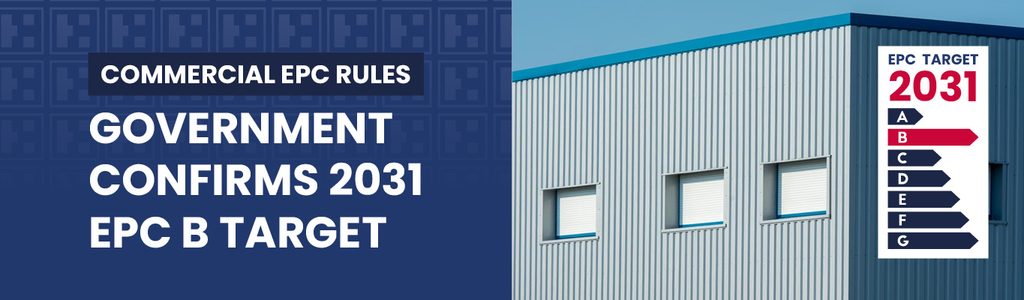
Commercial landlords face a significant new energy-efficiency milestone after the Government confirmed plans to require larger privately rented buildings to achieve an EPC rating of B from 2031.
The Government’s announcement on 18 June 2026 provides greater clarity on the future of Minimum Energy Efficiency Standards (MEES) for commercial property, following years of uncertainty around proposed changes to the regime.
EPC B target for larger buildings
Under the proposed approach, privately rented non-domestic buildings of more than 1,000 square metres will need to meet EPC B from 2031, where the required improvements are cost-effective.
Importantly, the Government has confirmed that the previously proposed interim EPC C requirement will not be introduced. Earlier plans had envisaged a staged move to EPC C in 2027 and EPC B in 2030.
The revised approach instead establishes a single EPC B target for larger properties from 2031, giving landlords additional time to plan and invest.
Smaller properties remain at EPC E
The proposed changes are focused on larger commercial buildings. Properties below the 1,000 square metre threshold will continue to be subject to the existing EPC E minimum, unless an applicable exemption applies.
The current MEES rules remain in force, meaning landlords generally cannot continue letting F- or G-rated properties without undertaking the required improvements or relying on a valid exemption.
What does this mean for landlords?
While 2031 may seem some way off, the announcement is likely to bring energy performance further into commercial property investment and asset-management decisions.
Landlords with larger buildings should consider:
For many older offices, industrial units and retail properties, reaching EPC B could require significant investment in areas such as heating, lighting, insulation, glazing and building controls.
The cost-effectiveness test and exemptions will also remain important, meaning the final compliance position will depend on the circumstances of each building rather than its EPC rating alone.
What happens next?
The Government’s announcement sets out its intended policy direction, but secondary legislation will still be required before the new requirements become legally binding.
Nevertheless, the direction of travel is now considerably clearer. For owners of larger commercial properties, the next five years provide an opportunity to assess portfolios, prioritise investment and incorporate energy-efficiency improvements into wider asset-management strategies.
With EPC performance increasingly linked to the long-term value, lettability and attractiveness of commercial property, landlords would be well advised to start preparing now rather than wait for the 2031 deadline.
For further information please visit https://www.gov.uk/government/consultations/non-domestic-private-rented-sector-minimum-energy-efficiency-standards-epc-b-implementation/outcome/minimum-energy-efficiency-standards-mees-in-the-non-domestic-private-rented-sector-interim-response or speak to one of the commercial team at Hazells on 01284 702626.

Written by Marsha